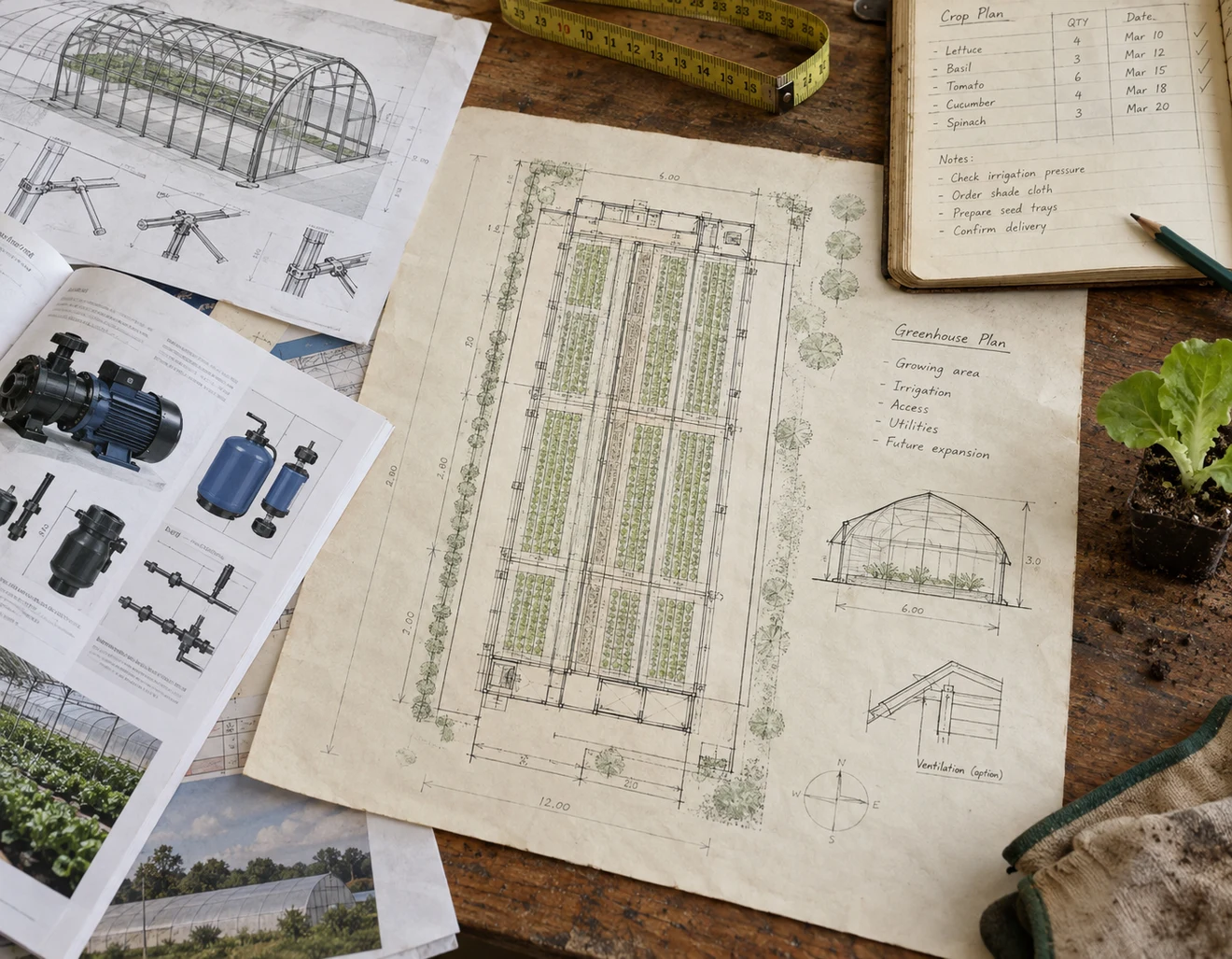
01 / Define the project
Write down what you know. Label what you assume.
A crop idea becomes more useful when it is connected to a buyer, a place and the people doing the work. Leave an unanswered question visible rather than turning it into a design decision.
| Prompt | Capture now | Question to keep open |
|---|---|---|
| Project stage | New build, conversion, upgrade or expansion; what already exists. | What must change, and what needs to keep working? |
| Product and buyer | Crop ideas, product form and intended buyers. Mark buyer interest separately from a commitment. | Who would buy the produce, and what would they expect? |
| Site | Broad location, available space and evidence already obtained. | What has actually been assessed, and what is still unknown? |
| Daily work | People, experience, training, harvesting and packing needs. | Who would carry out routine work and respond to a problem? |
| Equipment and support | Existing equipment and the help needed with installation, care or records. | Which responsibilities need a named owner? |
| Constraints | Budget stage, intended timing and uncertainties. | Which assumptions need evidence before any commitment? |
A project brief organizes discovery. It is not a quote, approved design or installation commitment.
02 / See the gaps
An early brief can be useful without being complete.
Illustrative planning example · invented, not a COAgri customer
Lettuce, basil and a possible greenhouse.
A grower is exploring fresh lettuce and basil for a local restaurant. A possible greenhouse site exists, but the water evidence, power capacity and a committed buyer have not been established.
- Record the idea
- Two possible crops, a possible buyer and a candidate site.
- Record the gaps
- Water suitability, electrical evidence and buyer expectations still need assessment.
- Carry forward
- Identify who can assess each gap before selecting equipment or a growing system.
The example is deliberately unfinished. It shows how to separate an intention from supporting evidence; it does not recommend a crop mix or system.
03 / Prepare the discussion
Take three questions into the next decision.
- What evidence is missing?Name the unknown rather than assuming an answer.
- Who can assess it?Identify the relevant growing, equipment, site or buyer expertise.
- Which decisions depend on the result?Keep the dependency visible before choosing a package or timeline.
Use this to organize a discussion. A completed checklist does not approve a design, site or operating procedure.
Next, use the Site Readiness guide to organize the site questions, or create a local farm brief you can review and download.
Use these questions to organize discovery. Equipment choices, design, operating procedures and service terms follow assessment of the actual project.